
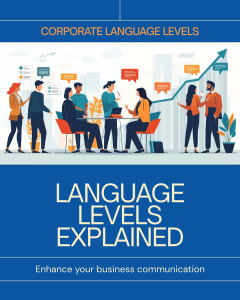
 In a world where borders blur and business moves fast, communication has become a game-changer — not just a skill. At ELAM, we understand that strong language abilities fuel stronger teams, smoother collaboration, and more confident professionals. That’s why our programs are built around the internationally recognized Common European Framework of Reference for Languages (CEFR), a tool that gives clarity, structure, and purpose to every learner’s journey.
Why CEFR Matters for Corporate Training
In the corporate environment, expectations around communication vary widely depending on each role, region, and responsibility. CEFR provides a universal language proficiency scale, allowing companies to clearly define the skills their employees need — from email writing and customer service to presenting, negotiating, and leading.
At ELAM, this framework guides our methodology and ensures measurable progress. Whether a team is learning English, French, or another corporate language, CEFR helps align training goals with real workplace demands.
The ELAM Language Levels Explained
ELAM’s levels align directly with CEFR, and each stage represents a major step in professional growth. Using the vocabulary ranges and recommended study hours outlined in our internal guide, here’s how each level applies specifically in business contexts :
A0 – Pre-Beginner
Learners begin with approximately 100 words and around 50 hours of study. This stage builds the foundational blocks of communication — essential for true beginners entering a new linguistic environment .
A1 – Beginner
With up to 700 words and 150 hours of learning, professionals can introduce themselves, understand basic questions, and express simple workplace needs. This level supports early confidence in daily, predictable interactions .
A2 – Pre-Intermediate
Expanding to roughly 1,500 words, learners manage common workplace activities such as scheduling, asking clarifying questions, or participating in simple small talk. Communication becomes more spontaneous and less memorized .
B1 – Intermediate
At this stage, learners reach approximately 2,500 words and can engage in more complex exchanges. They can describe processes, give explanations, and participate in longer conversations about familiar professional topics — a key level for many daily business interactions .
B2 – Upper-Intermediate
With around 4,000 words and strong fluency, professionals confidently participate in meetings, present ideas, debate solutions, and interact with clients. This level is often required for roles involving cross-functional collaboration or international communication .
C1 – Advanced
Reaching about 8,000 words, learners can adapt their communication style to different audiences, lead discussions, and express ideas with nuance. This level is ideal for managers, leaders, and specialists working in multilingual settings .
C2 – Mastery
With approximately 16,000 words and full language control, professionals at this stage can negotiate complex agreements, analyze detailed content, and communicate with precision and sophistication in any context. It represents complete mastery — a powerful asset in global leadership roles .
How ELAM Brings CEFR to Life
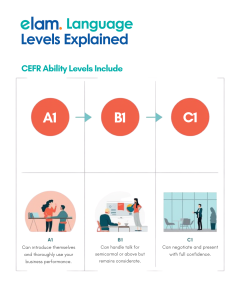 At ELAM, each learner receives personalized guidance tailored to their starting level and professional objectives. By embedding CEFR standards into every course, we ensure that every step — from basic introductions to confident negotiations — is measurable, strategic, and aligned with real business needs.
Understanding CEFR levels doesn’t just clarify where learners are — it illuminates where they can go. With the right structure and support, every professional can unlock clearer communication and greater career success.